Sunday, 26 March 2017

Week 9/10


We're already on week 10, wow! Last week, week 9, was actually spring break so nothing eventful pertaining to class really happened. Week 8 seemed to have gotten away from me as I forgot to write a post for it. So, here we are at week 10 getting so close to finishing the semester already.

Smart Project

Week 10 was high focus on our smart projects. Tuesday was a particular emphasis because we were to meet with our professor to talk about how the team is working and where we will be heading in the future with the product. Specifically we got to talk about the survey questions we had made ahead of time and got to refine them before putting them out there.

Our target market for our smart project product, the Key Keeper, is college students. We decided to go with college students because they would benefit the most from a product that would allow them to stop forgetting their keys in the dorm rooms.

While some would prefer to do as Zoey Brooks did and remember their key by wearing it as a neckless, our product would make it easier for students to keep their keys how they already are. They would just have to hang their keys on our device and the device would help to alert them whether they forgotten their key their or not.

Our survey that we put together would help us to see if others believe our product would benefit them and would also help us to work out some kinks with the product as well. Seen below are the final questions that we've decided upon:

1.           Describe what you do when you enter your dorm room.
2.           Describe what you do when you leave your dorm room.
3.           Do you consider yourself an organized person?
4.           Do you have a special place for your keys?
5.           Do you lose your keys? How often?
6.           How do you get yourself to remember your keys?
7.           What do you usually do when you get locked out of your room?
8.           Would a product that alerts you if you forgot your keys be of interest to you?
9.           Listen as we briefly describe our product to you. 
10.        How much would you be willing to pay for this type of product?


By asking these questions to various college students it will help us to refine our product more to target our consumers better and make the product the best it can be. We also have created a few more questions to be able to ask public safety officers to find out about protocol when students lock themselves out. Also we would be speaking to the head of facilities as well to find out his input about our product.

Pricing 

Thursday's class was all about pricing. We were required to read chapter 19 before the start of class to be ready for what we would be talking about that day.

During the class we were divided into our smart project groups and paired with another group so that we could compare answers to the questions we were about to be asked. We were to pull a piece of paper from a hat and on it would be a question in which we had 3 minutes to think of an answer that pertained specifically to our smart project.

One of my personal favorite questions asked about various discounts, allowances, and rebates that could be given with our product. As we talked we realized a rebate would not bode well with our product and that a discount of some sort would be better off.


Specifically we believed a seasonal discount would be the best where in the winter we could sell for less because students will already be at school and school supplies will not be on high demand. Then when the summer comes in and back to school shopping is very prominent we would keep the product at regular price so as to profit more.


Many other questions were asked as well including things like the best way to price the product, factors that would effect pricing, and which cost determinate applies most to our product. All these questions got us thinking more and more about what the cost should be for our Key Keeper product and that we will have to somehow figure it out in the next few weeks before we present our final ideas.

Sunday, 5 March 2017

Week 7

Marketing Concepts

Two concepts that we focused on this week was Positioning and the Value Proposition Canvas. These were two concepts that really stood out to me when looking over the products and brands. Positioning focuses on developing a marketing mix to draw customers to a certain brand or product. An example would be Walmart; They would use Price/Quality Positioning to draw their customers in. They focus on being the cheapest option out there which is why many people continue to return to Walmart. Other options of positioning bases are:

  • Attribution: focuses on features or customer benefit of the product
  • Use/Application: stresses the applications and different uses of a product
  • Product User: focuses on a certain type or classification of shopper
  • Product Class: tries to tie the product with a particular category of products.
  • Competitor: pits product against competitors
  • Emotion: uses emotion to draw in customer due to their feelings
Positioning is something companies focus on to be able to sell their product and be able to draw in the consumers. On the other hand the Value Proposition Canvas is used to evaluate the product to see if customers will want it or not.
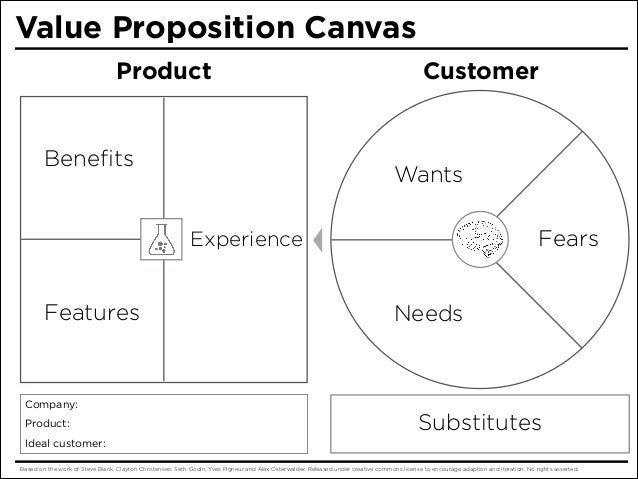
The Proposition Canvas tracks the benefits, features, and experiences of the product to make sure that everything is reviewed about the product. Then looking at all these they are assessed based on whether it is a want or a need for the customer. The fears of some aspects of the product are also analyzed and then substitutes of the product are written down as well to see if it is a niche product or not. 

By doing both the Value Proposition Canvas and choosing a Positioning base to go with a product it will make it easier to market to the consumers and be a successful business.

Gatto Cafe
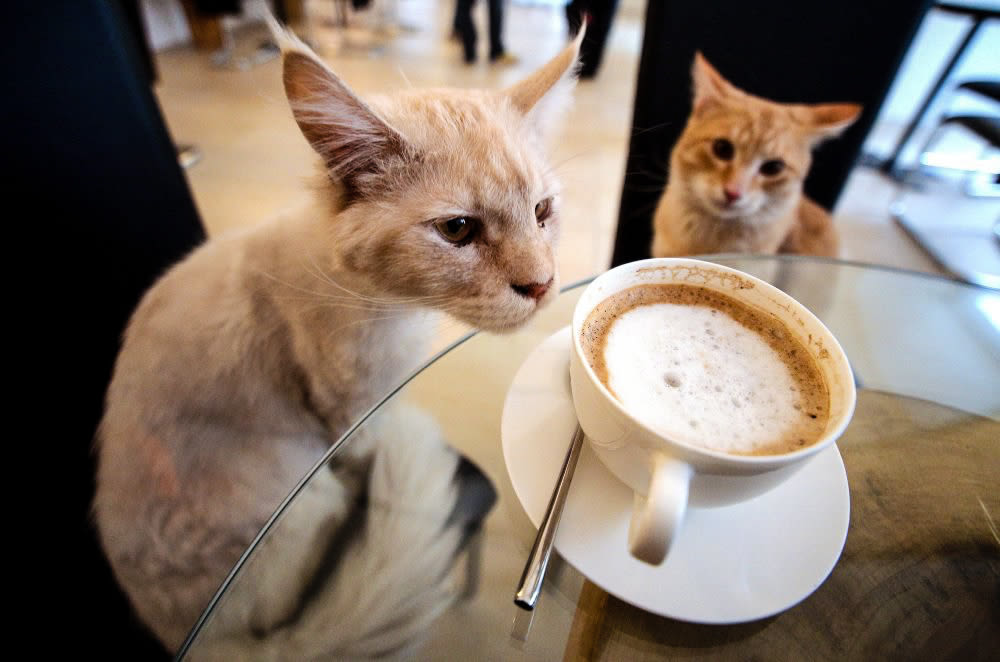
We applied the two above concepts to a Shark Tank product called the Gatto Cafe. The Cafe was supposed to be a cat cafe where they would sell small treats such as baked goods and coffee and people could enjoy these along with the company of many cats. The cats would roam around the cafe and would also be available to be adopted by people visiting the cafe.
When selecting a positioning base it was said that emotion would be the primary base used. They would tie in the fact that the cats were rescues to make people want to come visit and enjoy the cats company.

The Proposition Canvas helped to find many fears of the customer such as cleanliness, the costly entry fee, the mixing of animals and food, and more. It also showed that it was hard to find many benefits and features of the product which made assessing the customers wants and needs hard as well. By doing this it seems that the product was not a very needed product and provided lots of potential problems.

Smart Project

The progress on our smart project has been going well. We were able to meet with our senior marketing consultant. She enjoyed our idea and designs but told us to really be able to refine them to make sure we are able to accurately describe it in depth to others. She also said we could refer back to her for anymore things needed for the project.

Relating the project back to the concepts learned this week I feel that our product would be positioned on the basis of attribute. We would have to focus really on what the product does and how it would benefit the consumer if they had it. With the Key Keeper product they would never forget their keys or lock themselves out and that is what we really would have to shove down their throats for them to buy the product.

Sunday, 26 February 2017

Week 6

Phone Soap

The focus of the classes this week was primarily on the product Phone Soap as seen on Shark Tank. The product is a charger that also uses UV light to get 99.9% of bacteria off of a consumers phone.

The way phone soap works can be seen through the video above. It shows how the phone will be cleaned and charged within a 5 minute period and how you are able to switch out chargers to accommodate different phones or tablets.

One thing we focused on in class that was noted in the Shark Tank episode was who the market of this product would be? Is this product a Business to Business (B2B) Product or a Business to Consumer (B2C) Product? The Sharks were split in the decision with some of the sharks opting out of the deal do to this specific reason. 

The Business to Business side of it was seen by Mark Cuban. He saw the potential for the product to be put into hospitals to be able to sanitize them after seeing the sick. The fact that people were concerned with all the germs of a hospital he saw as a selling point and could be able to market it to sell it to the medical facilities.

On the opposite side with Business to Consumer, Lori Greiner saw high hopes in selling it on QVC. The creators of phone soap had already noted that their largest buyers were desk workers that were able to clean their phone while doing work in the office. Lori thought that was also their largest sellers and that putting it on QVC would get the word out more and hope to advertise it better. This helped to teach the importance of figuring out what type of product you have and where your specific market is.

Smart Project

For our smart project we had to finalize our last design as to what we are going to be doing. We to combine two of our original designs to be able to have both a dead bolt that would keep the door open if the key is left behind and also a weighted sensor to alert them if the key is still on the hook. The final design can be seen to the left.
Along with this we have a meeting scheduled to be able to get key advice from a senior marketing major. She will be able to help us with logos, colors, advertisements, and making sure we know exactly where we want to market the product to. That also goes back to what we discussed before with the B2B or B2C products. I feel this product could easily be a B2B product and we could sell it to colleges to be able to put in dorm rooms. We will have to talk it over as a group but will keep refining our product in the next weeks.

Sunday, 19 February 2017

Week 5

Segmentation

Tuesday of this week started off with a look at the mind maps along with the advertisements we had to make prior to the class. Each advertisement was geared towards a certain demographic and we got a look at a variety of different groupings.

My own was Cosmopolitan and while there were other classifications that were just like cosmopolitan, they were all slightly different. They could be basically the same group yet they could be different in age, or they could be different in where they reside, or if they have kids or not. The slight differences made all the change when it came to the ads as well.

There were over 60 segmentations on the Prizm website we used to check out the different groups we would be gearing our ads towards. Here is a look at just some of them:


Smart Projects

On Thursday we had another combined class to look at our smart project progress. Since working on it this weekend we had 3 designs for the actual product as well as designs for the logo. The way the class worked that way was we were to first present our refined POV statement and then go on to talk about our different designs. After this we were to take a gallery walk to look at the other groups designs.

The walk was nice to see what everyone else had done with their projects. We were also to give feedback to other groups to help clarify questions or to make opinions on which designs seemed better. Then we were to come back and look at the comments made on our project. Some helped us to select which of our 3 logos might be the best, they can be seen below.

Other comments were more questions as to hazards about our products. Many were confused as to how people would be able to leave their rooms if they were in a rush. We were able to clarify at the end that our product wouldn't restrict access to the door but just give extra warnings to the person so they wouldn't forget their keys. After all of this we are to pick our final designs to be able to start work on making and marketing the actual product.

Sunday, 12 February 2017

Week 4


Snow day week!

This week we were only able to have one class to talk about everything but in that class I feel we covered a lot. We're talked about the two chapters, 6 & 8, which focused on consumer behaviors and marketing segmentation. We also were able to watch a shark tank episode and were assigned a small project to go along with it.

Chapter 6 & 8

For Chapter 6 we focused on the decision making process which I posted about last week. Going through each of the steps: Need Recognition, Information Search, Evaluation of Alternatives, Purchase, and Post Purchase Behavior. We compared these to different purchases, like how if you buy a pen you won't be doing lots of information searching compared to if you're looking for a car to buy.

In Chapter 8 however we looked at the differences in certain purchases and the level of decision making.

The picture above shows the 4 different types of decision making that a person might go through when purchasing a product. A limited decision would involve a high level of information search but low level of involvement. So in this case a limited decision may be something like shampoo, you want to make sure you look into what the shampoo is doing, if it is for straight hair or curly hair or if it helps with dry hair or keeps color in. Yet with the shampoo you won't have a lot of involvement because there isn't as much risk that comes along with buying that certain product.

On the other hand the decision could be a routine response which is low information search and low involvement which is just something like an impulse buy, where you wouldn't think much about what you're buying it.

Shark Tank

In class we watched the Shark Tank episode for the product Bambooee. It is a paper towel product that is made from bamboo that can be reused up to 100 times. The product was picked up by one of the sharks for exactly what they wanted. After watching the episode we selected different demographics to market the product to. Mine was Cosmopolitan which is middle age people usually without children that enjoy more high end things.

After doing more research into the Cosmopolitan market I found out that they are located usually closer to large cities. While Springfield is a well known city it does not host many Cosmopolitan people. Along with my home town of Plymouth Meeting, PA which I learned actually is home to mostly older residence.

Smart Project

Our smart project is coming along nicely, to say the least. I feel as a group we have a general consensus on what all the features will be and how it will look. We're in the process of narrowing down names and working on our concept screening. Chapter 6 & 8 have been a large help with the smart project because now I feel we're looking at it from a consumer point of view rather than a manufacturing point of view. We can pin point what type of things will influence our consumer to buy the product, which type of decision making process will they go through before buying our product, and what demographic are they in. In knowing all of this we can make our product better than the rest and market it correctly.

Monday, 6 February 2017

Week 3

Chapter 6

Week 3 consisted of looking into Chapter 6 and also working more on our Smart Projects. Chapter 6 was concentrated on consumer behavior and how the consumers make different decisions and what affects them.

When it comes to Decision Making many customers go through a process to be able to determine if they should buy the product or not. There are 5 steps in the process:


Need Recognition
  • Need recognition is basically just evaluating the product to see whether it is a want or need. Determining this can help the consumer to decide if they should buy the product or not.
Information Search
  • The information search is anyway of finding information about the product. It can be through an internal search, where a consumer just remembers information, or an external search, where they find information from an outside source. These help to make a well informed decision of whether to buy or not
Evaluation of Alternatives
  • After doing research the consumer will most likely try and find alternatives to the product. If there are alternatives that are more preferable to them they may take their money elsewhere.
Purchase
  • The purchase can be one of three kinds; planned, partially planned, or unplanned. Planned is when the consumer has gone through all the other steps of the decision making process and know specifically what they want to get. Partially planned refers to knowing a general sense of what you are going to buy, and unplanned is going in completely blind and impulsively buing something.
Postpurchase Behavior
  • After purchase there is a certain expectation that the product must uphold. Consumers are expecting the product to be as they thought and work properly. If not they may return it and set out for another product.

Aside from the Decision Making Process, there is also a number of different influential factors that play a role in how a consumer will buy products. Some of them include:

Consumer involvement is a large factor. If the consumer is more involved in the purchase then they may be more or less likely to buy something. If they are more interested in the product they may be more involved.

Social Influences such as family, opinion leaders, and reference groups will sway peoples decisions. If a person is unsure of a purchase they are likely to ask the opinion of others. In doing this their buying decision could change significantly. Things like buying clothes will sometimes be a group decision because you need a second opinion to make sure it looks right.

Smart Project
These consumer behaviors can help us to enhance our product more. One specific part is that for our product for forgetting your keys there aren't really any alternatives. There is no other device that really will do the same thing as ours which gives us an advantage.

With our smart project however we do have lots of work. We are still in the designing phase really. We aren't quite sure what our name is, how it will look, exactly all the usages of the device. We have created a problem statement and identified some trends, constraints, and criteria for the product though.

Problem Statement: To design a device that can prevent someone from locking their door unless they have their keys on them.

By identifying all of these it will help to make our process easier so we can go on to advance the product more and figure out exactly how we will make and market it.